| |
Thrissur,
with its rich history, cultural
heritage and archaeological
wealth, is rich in cultural
activities.
From ancient times, this
district has played a
significant role in the
political history of south
India. Thrissur, the name
derived from 'Tiru-Shiva-Perur'
(the town with the name of Lord
Shiva) is the cultural capital
of Kerala.
Thrissur is a city situated in the centre of Kerala state, India. It has a population of around 5.2 lakhs. It is an important cultural centre, and is known as the “cultural capital” of Kerala. The name Thrissur is derived from “Thiru-Shiva-Perur’, which literally translates to “The city of the Sacred Siva:. In ancient days, Thrissur was known as Vrishabhadripuram as well as Kailasam (Mount Kailas, the abode of Lord Siva in South).
From very early times Thrissur has been a centre of learning. With the decline of Buddhism and Jainism due to the growing supremacy of Brahminism and the revival of Hinduism, Thrissur became an important centre of Sanskrit learning. It is believed that the great Hindu Saint, Adi Shankara, was born in answer to the prayer made by his mother at Vadakkunnathan temple. Sankara’s disciplesHastamalaka, Thotaka, Padmapada and Sudhachara established four Madhoms (mutts) in the city, namely the Northern Madhom, the Middle Madhom, the In – Between Madhom and the Southern Madhom respectively.
Other festival of this city “Puli Kali” (Tiger Play) and “Kummatti” (Mask Dance) that form part of Onam celebrations, the national festival of Kerala (Aug-Sept). They consist of enthusiastic processions of men painted and made-up as tigers, all members of different clubs that organize the event. Thousands gather to watch the ‘tigers’ dancing to the beat of drums.
Kerala Sahithya Academy, Sangeetha Nataka Academy and Kerala Lalithakala Academy (State Academies of Literature, Fine Arts and Theatrical Arts) are head quartered at Thrissur making the epithet ‘cultural capital of Kerala’ really significant. The internationally acclaimed Kerala Kalamandalam, a state academy for the promotion of classical arts is also situated at Cheruthuruthy, around 30 kms from Thrissur town.
Geography and Climate
Thrissur is situated in south western India 10.52A^o N 76.21A^o E and is at sea level. It spans an area of about 66.15 Sq. km. The center of the city is theVadakkunnathan temple located on a small hillock. Thrissur Round (Swaraj Round) is one of the largest roundabouts in the world.
The city enjoys a tropical climate, and the monsoons start in June. Although the months of April-May can be very humid the famous Thrissur Pooram makes it a rewarding time to visit the city. The best weather is from October to February.
Thrissur is well connected to other cities in Kerala by both Rail and Road. It is within 55 km of the new Kochi International Airport and 80 km from Kozhikode Airport. Thrissur Railway Station is on the artery of the railway line connecting the Southern part of Kerala to the rest of India. Thrissur also lies on the National Highway NH-47. It is well connected to nearby cities and towns like Kochi, Kozhikode, Coimbatore and Palakkad.
Thrissur the heritage
The legend: Lord Parasurama after reclaiming kerala divided 64 gramas (domains) and the sivapuram gramam was the origin of Thrissur. The puram turned to peroor and Thrissivaperoor . Thiru is honorary, may be to lord “Vadakumnathan"
Town planning
During the flood of 1924 A.D( the biggest flood thrissur have ever seen),the locals of thrissur town went to neighboring places to see the “flood” as per the elders!!!!!!!! . Thrissur was having such a natural drainage system. The planning of the "gods own town" was immaculate. Prof. Gaddis, the renowned town planner from London illustrates about “vadakunnathan” and the Swaraj round. The temple is over a small hillock. The temple premise is large and plain having a strong & gigantic compound wall .The ground surrounding the temple is the heart of the town and the works as lungs to the people. The boundaries of the rounded ground are like a belly belt. And from this belt, exactly like the blood vessels the roads start to different directions. Lavishly praising to the natural drainage system Prof. Gaddis adds "To me this is the dream model .Instead of the temple, I would design a market in the center"
Some 100 +years ago - Thrissur had/was
Chiras (small lake /large pond) – Erattachira(Double chira) . Earlier it was “ southern chira” covering a vide area. After the completion of small road connecting mission quarters to “puthenpetta”( 5 lamps) it become erattachira . One far end of Pattalam and other one eastern side . The present Sakthan vegitable market was the first one and the second one was present manorama traffic island and the west end of “Ikkandawarrier road”
Eastern chira was filled by natural erosion and part of it was turned to paddy field and Pattalam chira was filled by municipal authorities in early 1960’s
Western chira and Northern chira are still there . But adjacent to Northern chira there was another chira “kachery chira”( theendary chira) ( kachery means office )where present North Bus stand is built .
There was east fort and west fort in thrissur but there are few “ kulams”( ponds)surrounding the town. Kannankulam (south) , Achenkulam (south west) changarankulam (west) kuttan kulam (north west) and keeramkulam(east). The surrounding places turned “kara” viz “kannamkulamgera”.keeramkulengara etc
Pattalam – A company of British army was stationed near the northern side of the “erattachira Siva temple” for some years. Hence the name Pattalam road and Pattalam. These army men (most of them were south Indians) used to take drill at the vacant space near present stadium and the British caption was staying at near by bungalow. This ground was called as “aniparambu” and the bungalow was called “aniparambu bunglow”which is the present Ramanilayam old block. Most of these jawans were Muslims and they practiced “ pulikali”( mask dance)inside camp during their festival. Of course there were local help . This was the origin of “ pulikali”
The present town hall was built at then famous “hanigton park”, near aniprambhu
Sakthan Thampuran(1751-1805) invited few tamil bramins and they settled at “ponganam”( pookunnam) and started textile business. The commencement of Sitaram Textile Mill gave a facelift to this area. Sakthan also brought 64 Christian families from suburbs (kattoor, kallor, chettupuzha etc) who settled at thrisuur town. (family names ending ”karan” may be denoting were a they came from ) That settlement turned a business center called “puthenpetta”.( anjuvilakku- 5 lamps –high road).The “Friday market”was famous and commodities are traded here and shipped to various places through “Aranattukara”port. Aranattukara was 24*7 port at that time. During the tenure of Diwan Sankunnimenon, a new canal was built (puthen thode) and the present “vanchi kadavu” near poothole (west to railway line near to goods shed) was formed. Gradually it turned to a mini port.
The corporation office was built in “ vandipetta”(parking place to bullock cart) to “ “havalock”( the main market of thrissur that time) market. The arch shaped entrance to market and near by chowka ( police station) was there till early 60’s. This was demolished and “jaihind market building” was constructed.
The first multi storied building was3 storied “nadakavukaran buiding” (the corporation building at hospital-high road corner?). There was only one church in thrissur town – the chaldian Syrian church. The Lourdes and New church was built latter. The model girls high school was “ Victoria Jubilee Cast Girls School” . The CMS School was at mission quarters . The round south was the only business area and the rest were residential area .Pazhaya Nadakkavu mostly Bhramins Naduvilal to naikanal and Model high school to Paramekkavu (with round about)mostly Nair houses.
There were two peepul trees (alumaram) in naduvilal and the road was in between.There was a peepul tree in front of Thiruvambady temple at the center of the road.
Night Mares: In northern round about in front of the present banerji club there was a "kanjiramaram" and thara. It was a “yakshi thara” as per legend . however pedestrian avoided this area after 8 p.m till 1940’s.
Its most prominent feature is
the Vadakkumnathan Kshethram or
temple, which has Shiva as its
presiding deity. Many rulers and
dynasties beginning with the
Zamorins of Kozhikode, Tipu
Sultan of Mysore and Europeans
including the Dutch and the
British have had a hand in
moulding the destiny of this
region. Raja
Rama Varma, popularly known as
Sakthan Thampuran was the
architect of the present
Thrissur town.
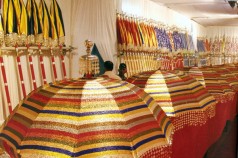
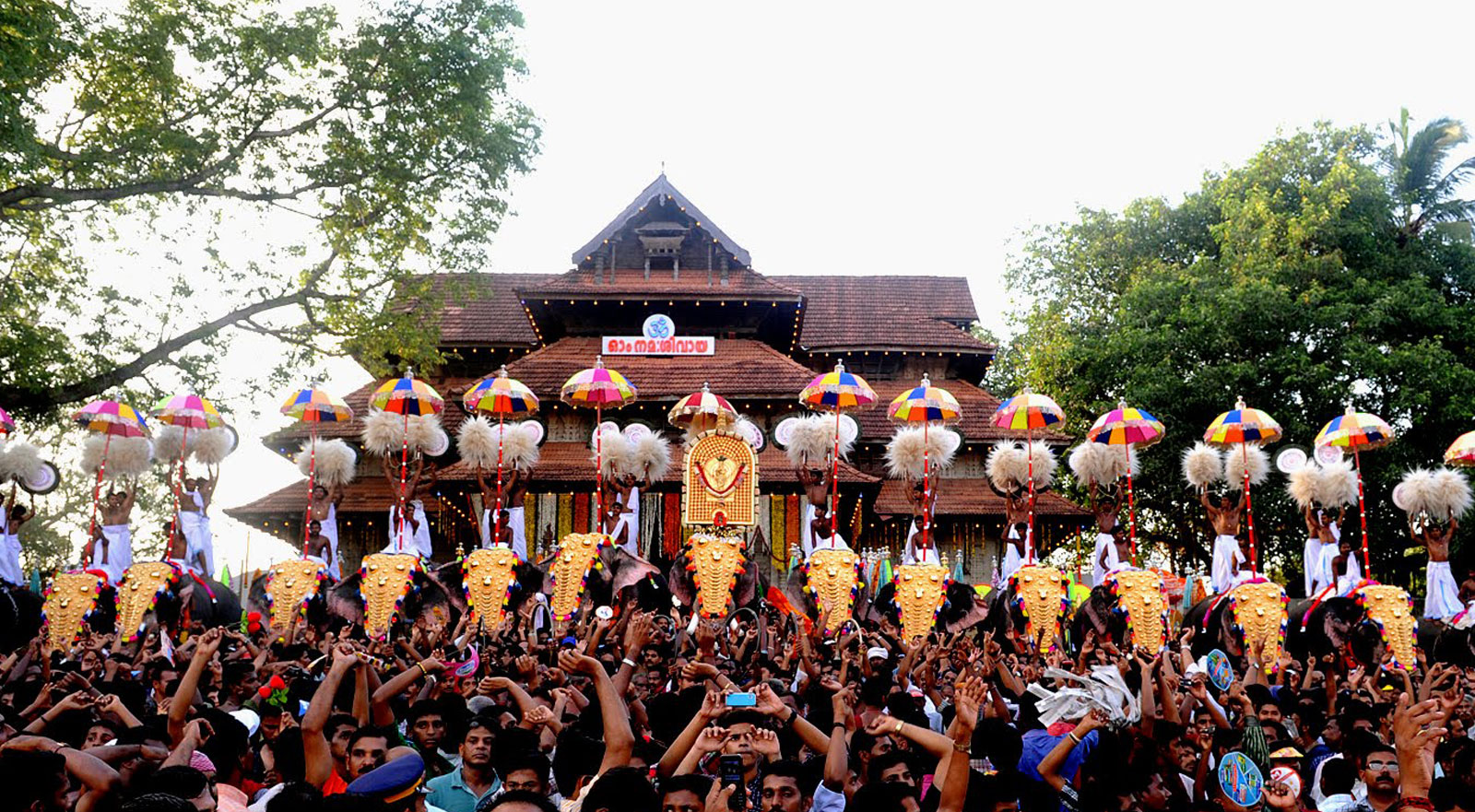
Today, Thrissur is world famous
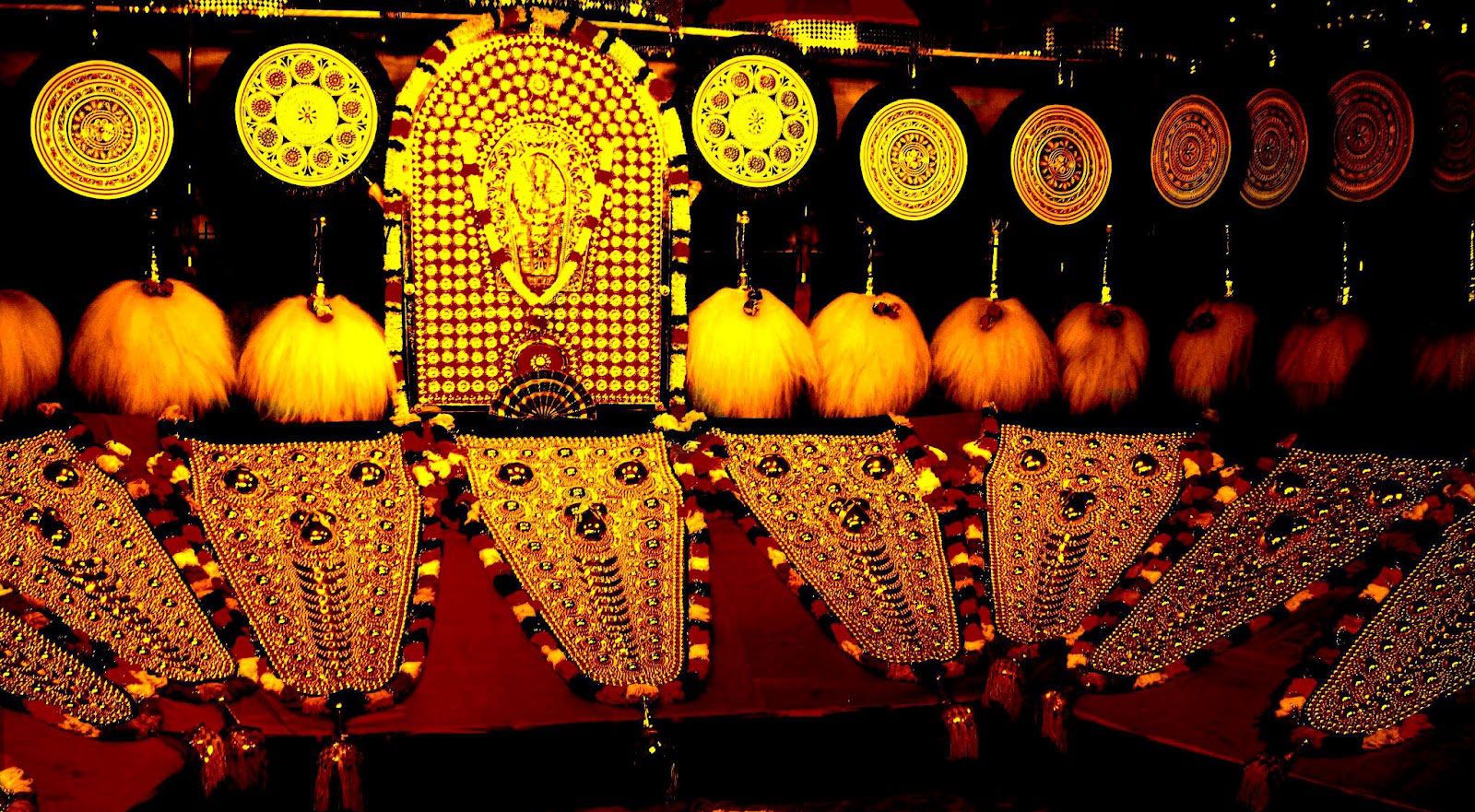
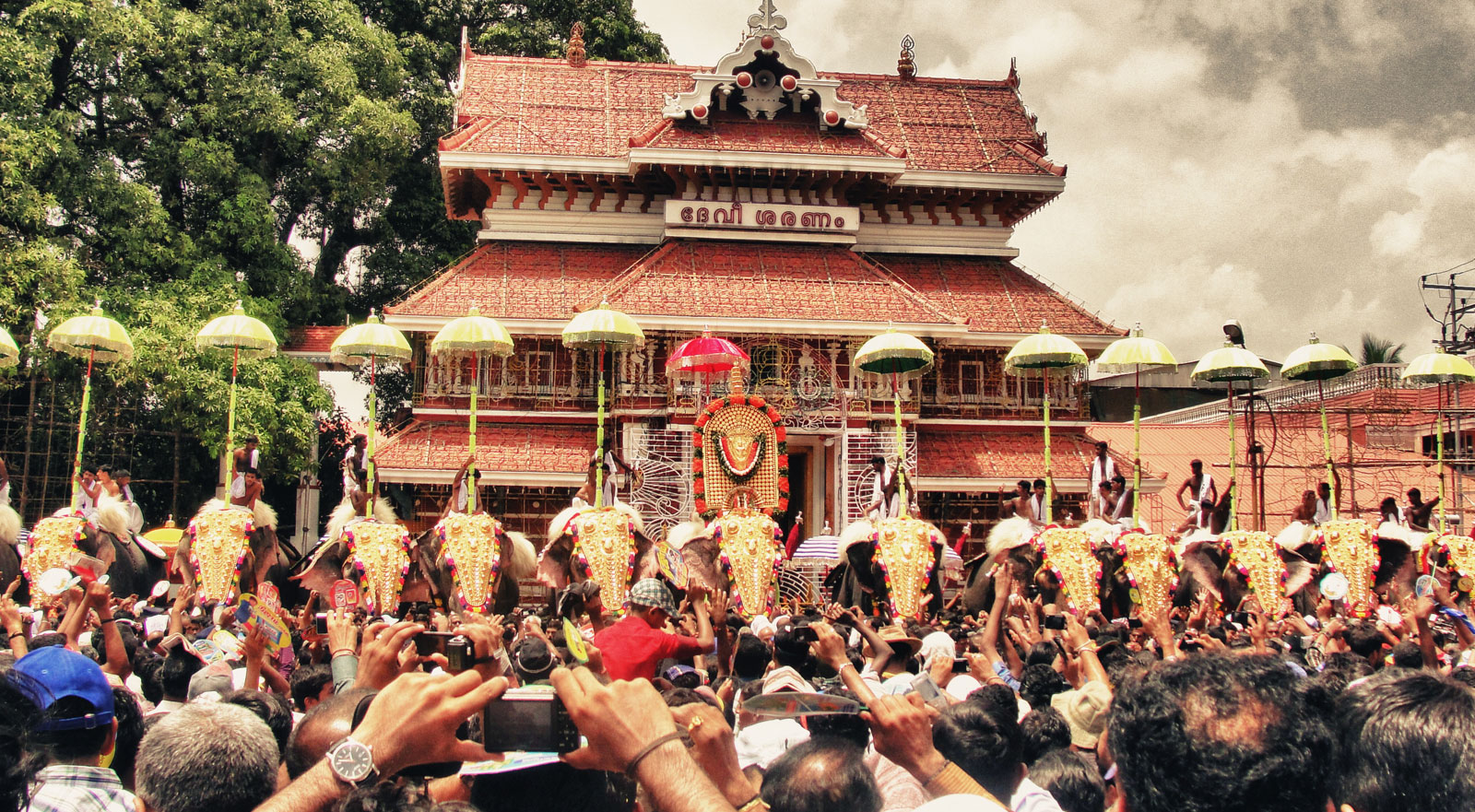
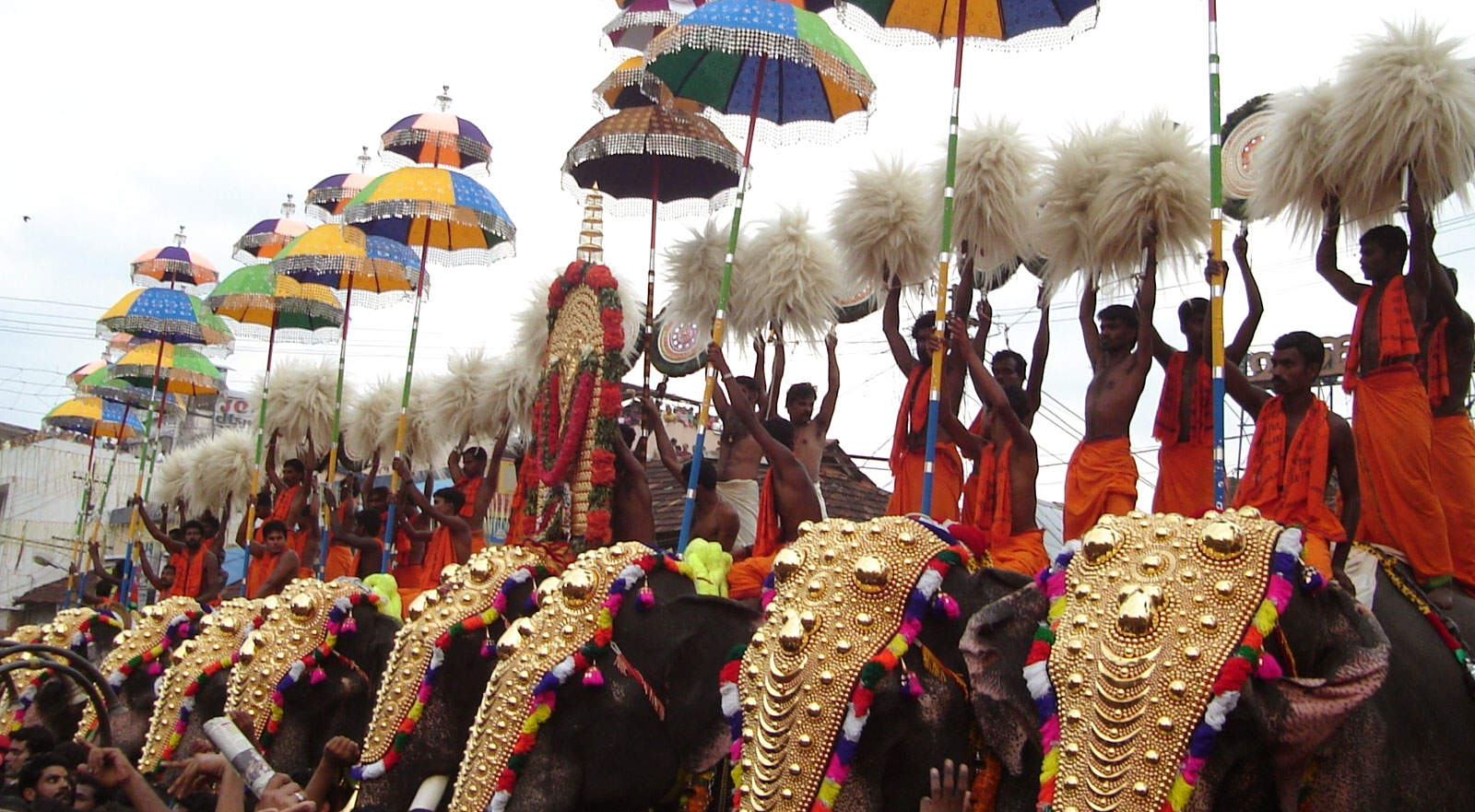
for its Pooram Festival, which
is one of the biggest festivals
of Kerala. Built around a
hillock top, Thrissur houses the
Kerala Kala Mandalam, the Kerala
Sahitya Academy and Kerala
Nataka Academy.

| |
Temples |
|
| |
Vadakkumnathan Temple
One of the oldest
temples in the state,
the Vadakkumnathan
Temple is a classical
example of the Kerala
style of architecture
and has many decorative
murals and works of art.
This is the venue of the
world famous Pooram
festival, celebrated
annually in April- May.
The fireworks at the
Pooram are a spectacular
sight. Non-Hindus are
not allowed inside the
temple. (Open: 04.00 -
10.30 am & 05.00- 08.30)
|
 |
| |
Guruvayoor
The historic temple is shrouded in mystery. According to belief, the temple was created by 'Guru'- the preceptor of the gods and 'Vayu'- the god of winds.
The eastern 'nada' is the main entrance to the shrine. In the Chuttambalam (outer enclosure) is a 33.5 m tall gold-plated 'Dwajastambham' (flagpost). There is also a 7-m high 'Deepastambham' (pillar of lamps), whose thirteen circular receptacles provide a truly brillant spectacle when lit.
The square 'Sreekovil' is the sacred sanctum sanctorum of the temple, housing the main deit. |
|
| |
Arattupuzha
The Pooram Festival at
the village temple in
March/April features a
ceremonial pageant of
over 60 tuskers carrying
the images of the
deities of 23
neighbouring temples.
Arattupuzha temple is
open 05:00 - 09:30 am &
05:00 - 07:00 pm. |
 |
|
|
Museums |
|
| |
Art Museum
Located in the zoo
compound, the art museum
displays collections of
woodcarvings, metal
sculptures and ancient
jewellery. Open 10.00 am
- 05.00 pm on all days
except Mondays.
Archaeological Museum
Located on the Town Hall
Road, the museum is open
from 10 am to 5 pm on
all days except Mondays
and national holidays. |
|
| |
Wildlife |
|
| |
Peechi Vazhani
Wildlife Sanctuary
Peechi Vazhani
Wildlife Sanctuary The
Peechi-Vazhani Sanctuary
comprising of the dense,
moist deciduous and
semi-evergreen forests
is situated in the
catchment area of the
Peechi and Vazhani dams. |
 |
| |
Others |
|
| |
Zoo
Situated 2 kms from
Thrissur town, it is
open from 9.00am - 05.00
pm on all days except
Mondays.
Town Hall
Houses the picture
gallery where mural
paintings from all parts
of Kerala are on
display. Aquarium: Close
to the Nehru Park. Open
03.00 - 08.00 pm.
Peechi Dam
20 km east of Thrissur,
this picnic spot offers
boating facilities.
There are frequent
private buses from
Thrissur. Built across
the Manali River, the
dam is a vast catchment
area of nearly 3200
acres with extensive
botanical gardens and
cascading fountains
offer numerous inviting
avenues for tourists.
Vilangankunnu
(7 km from Thrissur) The
Children's Park on this
beautiful hillside
picnic spot offers
amusement rides. It
remains open from 07:00
am uptil 07:00 pm. |
|
 |
| |
Cities |
|
| |
Punnathoorkotta
(2 km from Guruvayoor)
This home of 50 temple
elephants offers unusual
spectacles of the gentle
pachyderm. Brought as
ritual offerings to the
temple, these elephants
are groomed at this
fort. Visitors are
allowed into this
elephant hostel.
Cheruthuruthy
(32 km north of Thrissur)
Cheruthuruthy is the
seat of the Kerala
Kalamandalam, renowned
the world over for its
Kathakali Training
Centre. This music and
dance academy was
founded by the famous
poet, Vallathol Narayana
Menon. Training in
Kathakali, Mohiniyattom,
Thullal and other
traditional art forms is
imparted here. Cultural
programmes are also
arranged.
Bible Tower, The Our Lady of Lourdes Metropolitan Cathedral and Tthe Our Lady of Dolors “New Church” Basilica (the biggest in South Asia).
Cheraman Masjid: The foremost Muslim mosque in India is in kodungallore.The earlier names of Kodungallur were musris, muchiripattanam, shingali, kodumkaliyoorr etc. Besides the main temple – Sree Kurumbha bagavathy temple - mele thali,kezhe thali, nediya thali and ara thali – temples were also here in Kodungallur. Musris was “Nalanda” of kerala and biggest sea port of this continent. When muslims requested a place for worship the Chera king Perumal gave ara thali temple to them. The deity was shifted to adjacent “Thiruvanchikulam” temple . That deity is called “arathali thevar”. Muslim’s built the first mosque in India at the original ara thali temple. |
|
| |
Waterfalls |
|
| |
Athirapally
Waterfalls
(65 km from Thrissur)
This 80 foot high
waterfall at the
threshold of the
Sholayar ranges is a
popular picnic spot.
Vazhachal
Vazhachal Waterfall (68
km from Thrissur) Just a
short drive from
Athirapally, this
picturesque waterfall is
close to dense green
forests and is a part of
the Chalakudy river.
Athirapally and
Vazhachal are the most
famous waterfalls of
Kerala that attract
tourists in plenty. |
|
| |
Forts & Palaces |
|
| |
Shakthan Thampuran
Palace
Also known as Palace
Thoppu, the campus
covers an area of 6
acres. Here one can see
three tombs (Shavakudeerams)
including that of
Shakthan Thampuran, the
greatest ruler of the
Cochin dynasty. |
|
 |
| |
- Thrissur Pooram
- Aarattupuzha Pooram
- Peruvanam Pooram
- Irinjalakkuda Ultsavam
- Kodungallore Bharani - Thalapoly
- Uthralikkavu Pooram
- Macchattu Mamaankam
|
|
 |
| |
|
|
 |
| |
-
Air
Nearest
international
airport is at
Nedumbassery, 58 kms
away.
-
Rail
Thrissur is an
important railhead
of the Southern
Railways.
-
Road
The place is well
connected with
almost all the major
towns and cities of
India.
|
|
|
|