2011 Thrissur Pooram Falls on: MAY 12th Thursday 2011. Madathi varau at 11:00 AM, Elanithara Melam at 2:30 PM, Kudamattam(Royal Darbar) at 5:30 PM, Fireworks on 13th May 2011 at 3:00 AM, 2012 Thrissur Pooram Falls on: MAY 1st Tuesday 2012.Madathi varau at 11:00 AM, Elanithara Melam at 2:30 PM, Kudamattam(Royal Darbar) at 5:30 PM, Fireworks on 2nd May 2012 at 3:00 AM, 2013 Thrissur Pooram Falls on: APRIL 21st Sunday 2013. Madathi varau at 11:00 AM, Elanithara Melam at 2:30 PM, Kudamattam(Royal Darbar) at 5:30 PM, Fireworks on 22nd May 2013 at 3:00 AM
 
Sree Vadakumnathan Temple Kanimangalam Sastha  Temple Chembukkavu Bagavathy Temple
Panamukkumpally Sastha Temple Pookkattikkara - Karamukku Baghavathy Temple Laloor Baghavathy Temple
Choorakkottukavu Bagavathy Temple Ayyanthole Bagavathy Temple Nethilakkavu Bagavathy Temple
Paramekkavu Temple Thiruvambadi Temple Sree Vadakumnathan Temple
Paramekkavu Bagavathy Temple Thiruvambadi Bagavathy Temple Sree Vadakumnathan Temple 


THRISSUR POORAM – THE ULTIMATE FESTIVAL

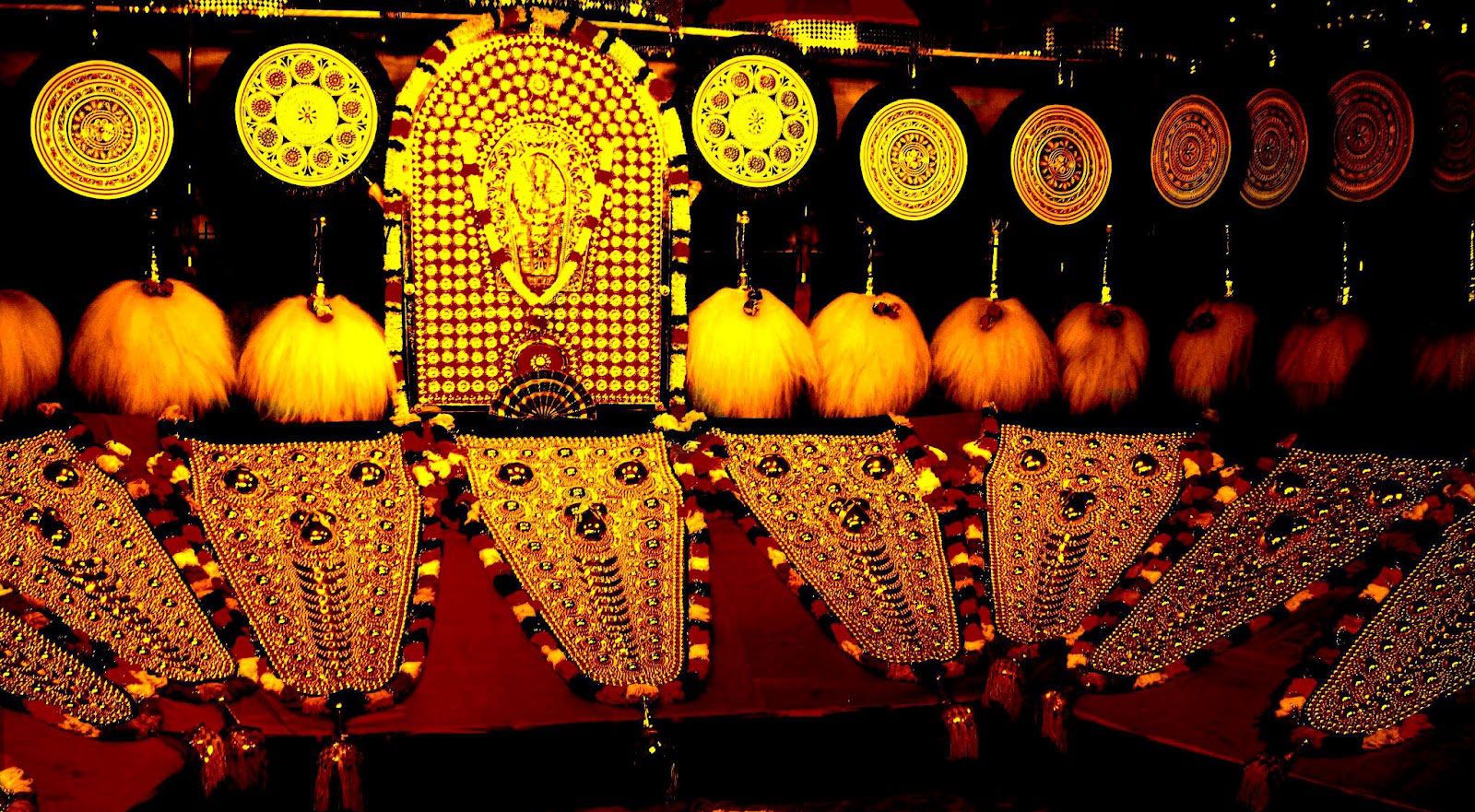
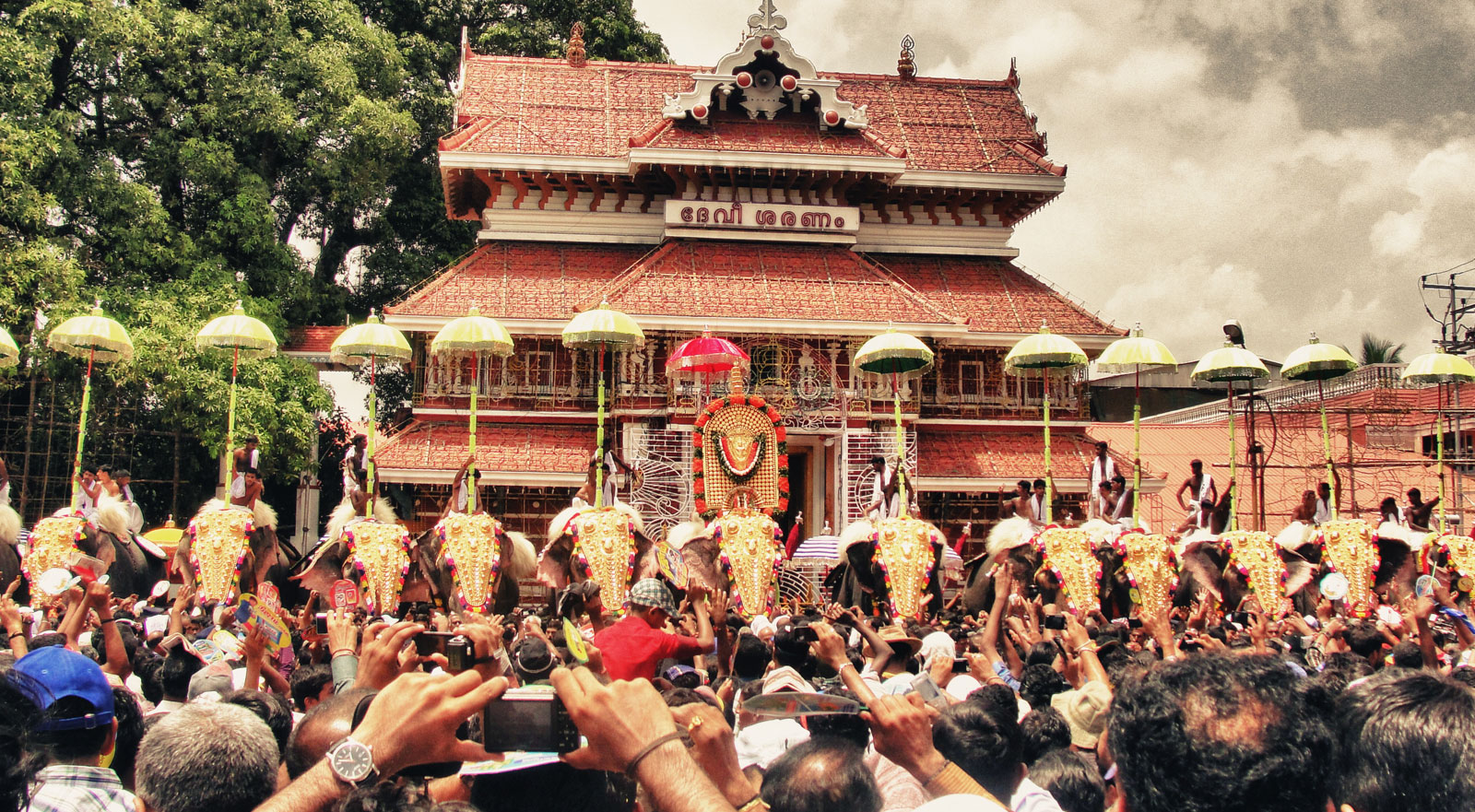
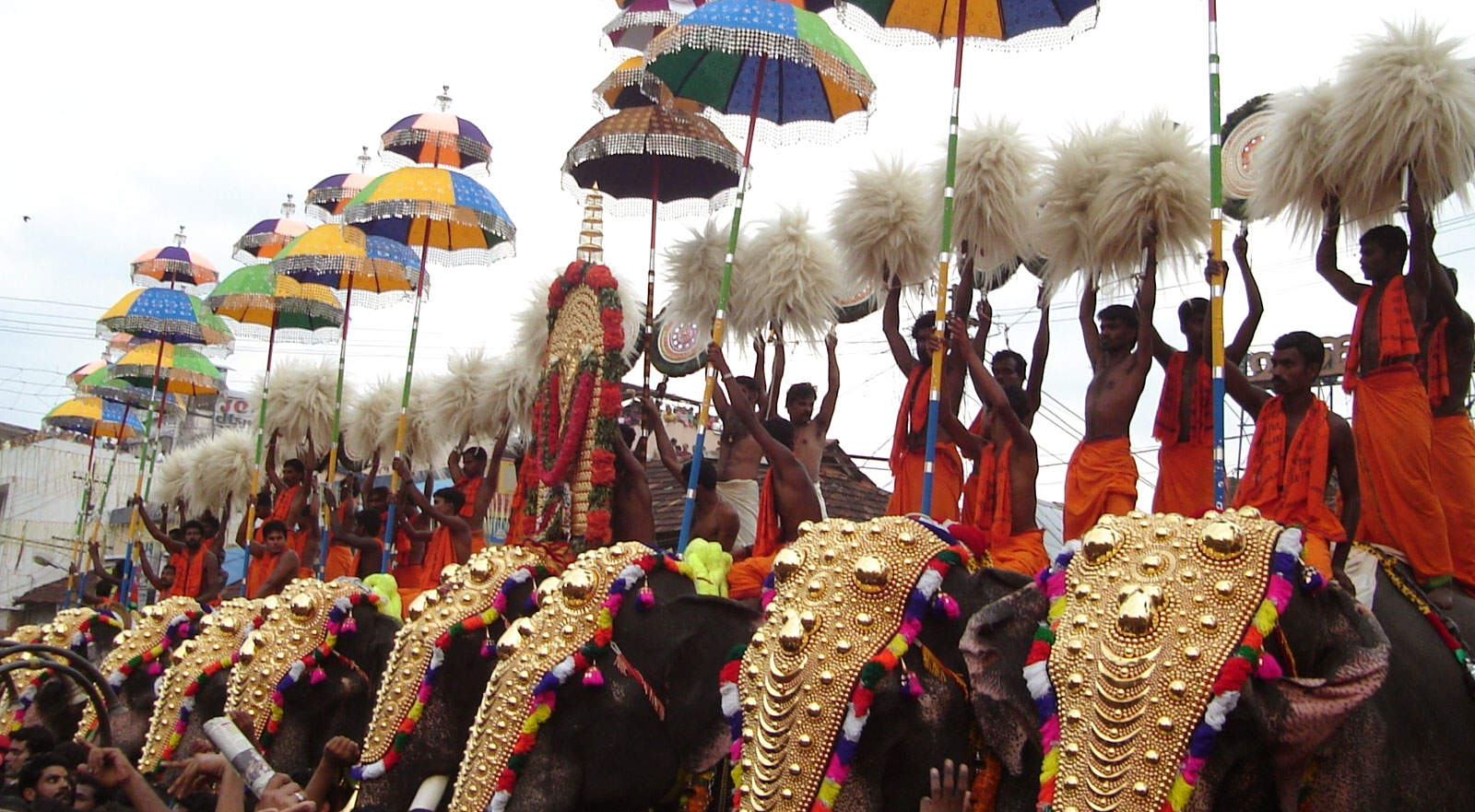
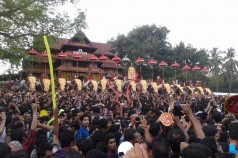
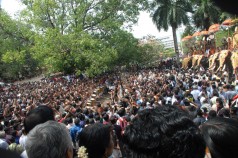
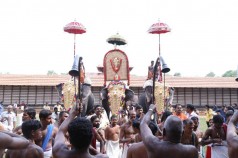
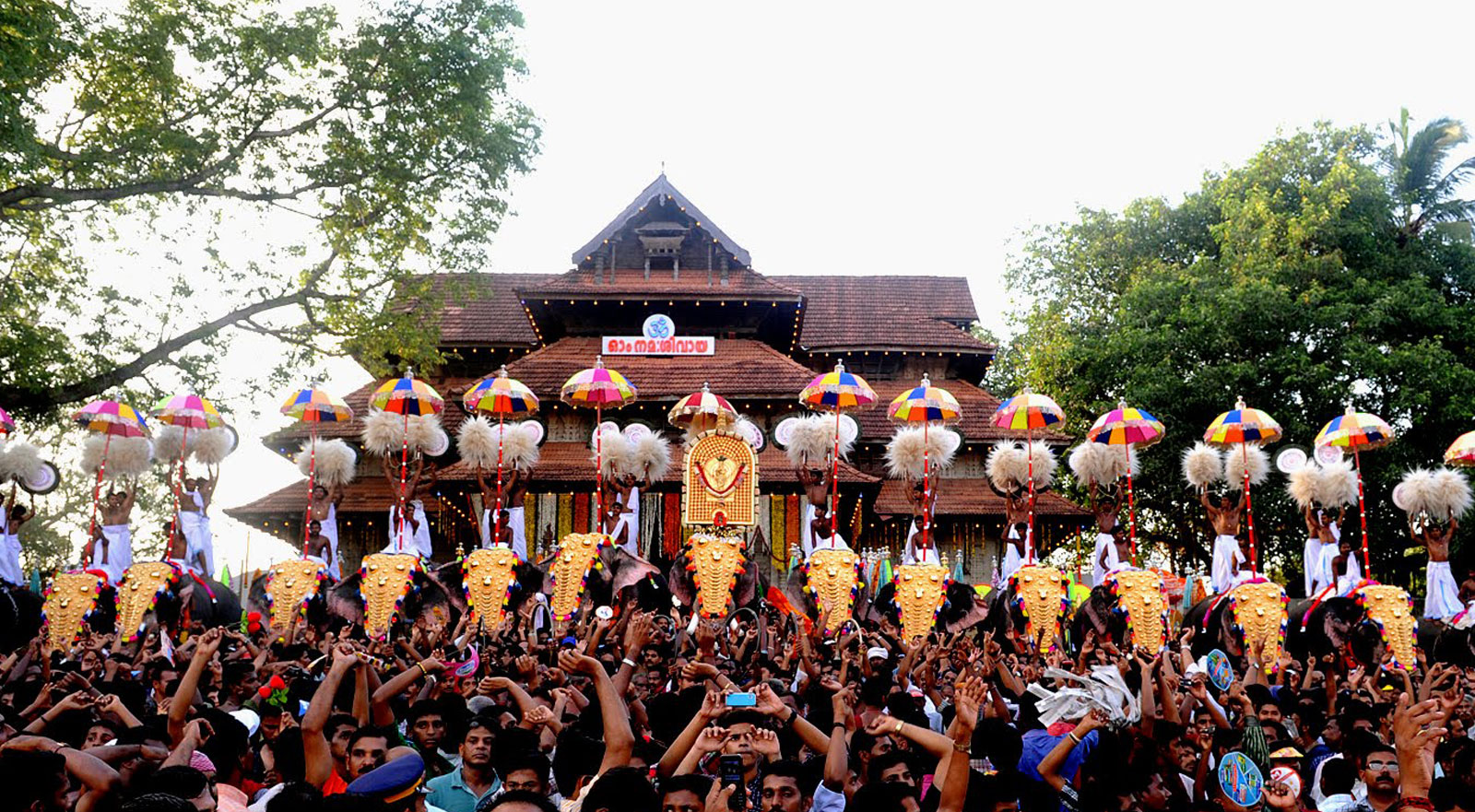
GanapathyThe Thrissur Pooram is one of the most spectacular festivals in the world. In terms of visual splendour, the grand assembly of caparisoned elephants, amazing pyrotechnic displays, spellbinding ensembles of percussion instruments and enthusiastic crowds, there is no match for it. One can’t find a festive gathering and celebration on such a scale anywhere else.

Thrissur is a city situated in the centre of Kerala state, India. It has a population of around 3.2 lakhs. It is an important cultural centre, and is known as the “cultural capital” of Kerala. It has a large number of well-known temples like Thiruvambadi temple, Vadakkunnathan temple and Paramekkavu temple, and two churches of note, the Our Lady of Lourdes Metropolitan Cathedral and the Our Lady of Dolors “New Church” Basilica (the biggest in South Asia.)

The name Thrissur is derived from “Thiru-Shiva-Perur’, which literally translates to “The city of the Sacred Siva:. In ancient days, Thrissur was known as Vrishabhadripuram as well as Kailasam (Mount Kailas, the abode of Lord Siva in South).

From very early times Thrissur has been a centre of learning. With the decline of Buddhism and Jainism due to the growing supremacy of Brahminism and the revival of Hinduism, Thrissur became an important centre of Sanskrit learning. It is believed that the great Hindu Saint, Adi Shankara, was born in answer to the prayer made by his mother at Vadakkunnathan temple. Sankara’s disciples Hastamalaka, Thotaka, Padmapada and Sudhachara established four Madhoms (mutts) in the city, namely the Northern Madhom, the Middle Madhom, the In – Between Madhom and the Southern Madhom respectively.

Geography and Climate

Thrissur is situated in south western India 10.52A^o N 76.21A^o E and is at sea level. It spans an area of about 66.15 Sq. km. The center of the city is the Vadakkunnathan temple located on a small hillock. Thrissur Round (Swaraj Round) is one of the largest roundabouts in the world.

The planning of the "gods own town" is immaculate. Prof. Gaddis, the renowned town planner from London illustrates it. The temple is over a small hillock. The temple premise is large and plain having a strong & gigantic compound wall .The ground surrounding the temple is the heart of the town and the works as lungs to the people. The boundaries of the rounded ground is like a belly belt. And from this belt, exactly like the blood vessels the roads start to different directions. Lavishly praising to the natural drainage system Prof. Gaddis adds "To me this is the dream model .Instead of the temple, I would design a market in the center"

The city enjoys a tropical climate, and the monsoons start in June. Although the months of April-May can be very humid the famous Thrissur Pooram makes it a rewarding time to visit the city. The best weather is from October to February.

Thrissur is well connected to other cities in Kerala by both Rail and Road. It is within 55 km of the new Kochi International Airport and 80 km from Kozhikode Airport. Thrissur Railway Station is on the artery of the railway line connecting the Southern part of Kerala to the rest of India. Thrissur also lies on the National Highway NH-47. It is well connected to nearby cities and towns like Kochi, Kozhikode, Coimbatore and Palakkad.

Thrissur the Cultural Capital

Thrissur is built around a hillock, crowned by the famous Vadakkunnathan (Siva) Temple, believed to have been founded by legendary Parasurama. The temple is a classical example of Kerala style of architecture and houses several sacred shrines. It is believed that Adi Shankara spent his last days here.

Apart from The Church of Our Lady of Dolors, popularly known as the New Church [Puthenpalli], the biggest and tallest church in South Asia. The Metropolitan of the Chaldean Syrian Church (the name used for the Church of the East in India) is also head quartered in Thrissur which is the first catholic church in India.

Apart from the Thrissur Pooram another local attraction is the “Puli Kali” (Tiger Play) and “Kummatti” (Mask Dance) that form part of Onam celebrations, the national festival of Kerala (Aug-Sept). They consist of enthusiastic processions of men painted and made-up as tigers, all members of different clubs that organize the event. Thousands gather to watch the ‘tigers’ dancing to the beat of drums.

Kerala Sahithya Academy, Sangeetha Nataka Academy and Kerala Lalithakala Academy (State Academies of Literature, Fine Arts and Theatrical Arts) are head quartered at Thrissur making the epithet ‘cultural capital of Kerala’ really significant. The internationally acclaimed Kerala Kalamandalam, a state academy for the promotion of classical arts is also situated at Cheruthuruthy, around 30 kms from Thrissur town.

Guruvayur Temple(28 Kms) one of the most famous temple of Lord Vishnu in Kerala, and Cheraman Masjid, one of the oldest mosques in the world, are also in this district.

The 10 day festival at the famous Koodalmanikkam Temple at Irinjalakuda (23 Kms) starts on the next day of Thrissur Pooram. This temple is the only one in India dedicated to Lord Bharatha, brother of Lord Rama. This festival is considered to be one of the most elegant among all festivals, and it also marks the end of the festival season.

Sree Vadakkumnathan Temple- An artistic marvel

Sree Vadakumnathan TempleOne of the largest temple complexes in South India is a classical example of rich Kerala temple Architecture. The main temple complex is spread over nine acres on a small hillock encircled by 64 acre thekkinkadu maidan. The 4 gopurams (magnificent gateways) beautifully carved out of wooden pillars and wooden bracket figures and the towering " pallamathils" ( boundary walls of late rite built in the shape of elephants belly) are imposing piece of skill and taste. The rare architectural techniques adopted are the mixture of many rituals, geometry, iconography, astrology, vastusastra, tantra sastra and murals with organic pigments. Most of the other temples in Kerala show one or more of these features but in Vadakkumnathan it is near to perfection and so it is unique.

It is believed that 33 crore devathas of Hindu mythology will be present on the pooram day. However few spaces are left for some deities with or with out temples in this complex. While entering there is stone "KALI" and there is Gosalakrishna, the naked Rishaba, Lord Parsurama, Dharma Sasatha, Naga raja with Nagayakshi (the serpent gods – which is the oldest form of god worship in Kerala) Sreechakra and Vettekkaran are the places to be worshipped. There are specified points where the devotees can offer their salutations to Lord Siva at Kasi, Lord Chidabharanatha at Chidambaram, Lord Siva at Rameswaram, Sree Kali of Kodungallore, Ammathiruvadi of oorakam, Lord Bharatha of Koodalmanickam, Sree Vyasa & Hanuman. The main enclosure covered with walls and Vilakkumadam is a multi –shrine. There are Four shrines dedicated to five devathas. The complex is said to have been built by Lord Prasurama. It is believed that The Amsaavathara (Partial incarnation) of Parsurama the Adi Sankara was born after his parents, who were childless for years, prayed at this temple. Legend also has it Sankara school of worship – Panchadevatha (five gods) - is followed here. Lord Shiva facing west and with Parvathy facing east, Vigneswara, Sankara Narayana, and Sree Rama are other shrines. Lord Vigneswara shrine is called venmadacoil. The devotees revere elephants as Lord Ganesh incarnate. It has been the regular annual practice at the Vadakkunnathan Temple for the last 20 years to conduct a large-scale Ashta Dravya Maha Ganapathy Havana and Aanayoottu (ceremonial feeding of elephants) on the 1st day of karkidakom month as per the malayalam calendar. "Gajapooja" also is conducted once in four years. The Sankaranarayana ( a combination saiva -vaishnava - the right side of Siva with left side of Vishnu) shrine, which is a double storied round coil, has beautiful 17th century murals delineating graphically the story of "Mahabharata".

Anayoot 2010 Anayoot 2010
   
Anayoot 2010 Anayoot 2010

Gajapooja - Anayoottu


The principle deity is Siva (Vadakkumnathan )

The idol is not visible, as it is covered under 3-5 meter high and 5-7meter wide mount of ghee, formed by daily abisheka (ablution) with ghee over centuries. In spite of high temperature, ghee does not melt, no insects & the collection is preserved as good as new even after centuries.

ISree Vadakumnathan Templet is believed that lord Siva (Kiratha) had a head injury during his fight with Arjuna and lord Dhannuandhara moorthy (Lord of Auyurveda) prescribed ghee ablution.

Outside this nalambalam the temple theater, known as "Kootthambalam" is situated. Exquisite vignette carved in wood, beautiful wooden pillars, acoustic treatments- this is an engineering marvel has no parallel anywhere else in the world. There was practice followed by carpenters to keep a small chisel at the most important place of the structure It is predictive that there is something wrong or the urgent maintenance is due if the chisel falls down. And the chisel fell down during the year1875 AD and Mr. Vellinezy Jatadevan Nampoothiri remodified this in 1880. More than 410 Sq.m. built area, this is biggest of this kind. The 41 day special program of "Koothu" (mythological story telling) and "Koodiyattom" (ancient form of dramatic dance) is performed here annually.

Mural Painting of dancing lord Siva with 16 hands is an amazing work of Madhurangattu Namboodiri. The fifteen hands are holding different armaments and last is holding a flag post with flag .While one leg is pressing the embodiment of papa (Apasmaramoorthi) and the other one is in elevated form. The moment the last touch (Opening the Eyes) was over the picture started to dance –according to a legend. Another mural is the Anantha sayana (Mahavishnu). The sculpture of large bullock (Nandikeswara) which is also there in the nalambalam . These are worshiped regularly along with sapthamathrukkal (seven goddesses)

More About Thrissur Pooram...


Renowned Elephants in Kerala
 
Thiruvambadi Siva Sundar Thechikotukavu Ramachandran Guruvayoor Padmanabhan Utoly Rajasekharan Nanu Ezhuthachan Sreenivasan
Gurujiyil Ananda Padmanabhan Chirakkal Mahadevan Mullath Ganapathy Adiyat Ayyappan Olarikkara Kalidasan
 
Cherpulassery Parthan Athira Vinod Utoly Padmanabhan Chirakkal Kalidasan  
 

Home  |  Thrissur Pooram  |  Gallery  |  Spectacle  |  About Thrissur  |  Links  |  Sitemap  |  Contact Us  |

Thrissur Pooram Co ordination Committee, Thrissur, Kerala, India. Email - mail@thrissurpooramfestival.com
Ph: +91 487 2423696, 487 2387563, 487 2306611

Copyright © 2007 www.thrissurpooramfestival.com. All Rights Reserved.
Site powered by: Keralainfotech.com