| |

Sree Karthyayani
Temple is
located in the
vicinity of
Ayyanthole Civil
Lines, the nerve
center of district
administration,
which is about 4 KMs
North West of famous
Vadakkumnathan
Temple.
Sree
Karthyayani Mahamaya,
the deity of this
temple presides over
with all prowess,
strength and
prosperity making
the people of the
area feel her
presence day in and
day out.
An enquiry into the
origin of the temple
will definitely
reveal a lot of
information and its
connection with
stories shrouded in
our
Puranas. One of
the stories related
to this temple is ‘Dakshayaga’.
When Siva started
his
Thandava dance
carrying the dead
body of
Sathi Devi,
who gave up her life
in the
YagnaSala
unable to suffer the
humiliation any
more, Lord
Vishnu to
pacify the outrages
Siva shot an arrow
and cut the body of
Sathi Devi into
fragments. It is
said,
Sathi’s bodies
was cut into 108
pieces and one of
the pieces is
believed to have
fallen in the place
where this temple is
located. Later on
during ‘Thretha
Yuga’ , Lord Vishnu
reborn as
Parasurama
found out this place
and performed
penance to have
Darsan of
Devi.
Pleased with this
penance, Devi
appeared before
Parasurama and later
immediately made an
idol identical to
Devi’s appearance
and he duly
performed the
installation
ceremony on his own
according to the
custom and entreated
Devi to protect the
people of the area
from all adversities
and calamities. The
idol of this temple
is exactly the same
that was installed
by Parasurama in the
‘Thretha Yuga’.
Another story
connected to this
temple, in the
Bhagavatha is as
follows. ‘Lord
Vishnu’ was reborn
as a child of
Devaki
as Sree Krishna and
at the same time
‘Adi Parasakthi’
took birth as a
daughter to
Yasoda.
As directed by the
Lord,
Vasudevan
exchanged the
children and King
Kamsa saw a female
child born to his
sister. As his usual
practice,
Kamsa
wanted to kill this
daughter also by
striking it against
the rock. When he
lifted the child by
her feet in his
attempt to strike on
the rock, the
beautiful child
escaped from his
hand by pushing
herself by kicking
on the shoulders of
Kamsa and flew away
in the space and at
last came to the
Temple in
Ayyanthole
and merged with the
idol installed by
Parasurama.
Ayyanthole is so
called because; it
is the place that
Devi chose for
merging with God
after kicking on the
shoulders of
Kamsa.
On account of the
divinity acquired by
this temple in ways
more than one, the
prowess and strength
of the Devi is not
only unprecedented
about also
inexplicable. The
auspicious Devi of
the Temple (Karthyayani)
may be worshipped by
the Devotees
according to the
belief and
imaginations. Devi
presiding in this
Temple is very
generous in granting
the wishes of
believes. The form
of the Devi is also
beautiful that
nobody will be
satiated by seeing
and looking at her
who is in a standing
posture with a
shining sweet face
and has Conch shell,
whirling disc, Lotus
and ‘Kadibandham’ in
her four hands. The
idol available in
the sanctum
sanctorum of this
holy temple is
exactly the same
that was installed
by
Parasurama. Made
of
Anjana stone
(that is black
stone) and well
covered by
Pancha
Loha (an alloy of
five of different
metals) the idol of
Devi with a pleasing
face and semi closed
lotus eye is also
beautiful that the
devotees want to see
her face again and
again every day.
Famous astrologers
have also expressed
their opinion
against any change
or modification of
the
Pancha Loha
covering or the
‘Prabha Mandalam’
around the deity.
According
to a writing found
on the rafter of its
roof, it is more
than 600 years old.
The
Pancha Loha
covering now
available in the
Sree Kovil was made
in the Malayalam
year 907 according
to some records kept
in the house of
Padinhattedath
Cherampatta
Namboothirippad.
After performing the
installation of
Devi’s idol
Sree
Parasurama also
prescribed the day
to day activities
and the Poojas to be
performed for the
Devi and also
entrusted the work
of the temple
administration to
five
Namboothiri
families (Brahmins)
of the area. Out of
the five all except
Kizhakkiniyedath
family is extinct
now. Poojas in the
temple are even
today the privilege
of the
Kizhakkiniyedath (Namboothiri)
family. In course of
time the quarrel and
feud between the
temples trusties
resulted in
difference of their
duties towards
temple and as a
consequence the day
to day affairs begun
to be affected. When
the trusties failed
in their obligation
the Government took
over the ownership
of the temple and
its properties and
later on entrusted
its administration
with Cochin
Devaswom
Board. At present
there are fifteen
other temples under
Ayyanthole
Karthyayani temple
and all are
administrated by the
Ayyanthole group
Devaswom Officer.
The
engravery of the
temple is superb. It
is well decorated
with birds garland (Pakshi
mala) and floral
garland (Poomala).
The circular design
of the inner and
square design of the
outer part of the
sanctum sanctorum is
an excellent example
of the exquisite
temple architecture
of the past.
Recently the
Sree
Kovil roof was
covered with copper
sheets and also new
beautiful mural
paintings are done
around the
Sree
Kovil. The
prostration platform
(Namaskara Mandapam)
in front of the
Sree
Kovil is also very
beautiful to see for
its engravery. The
door frames, doors,
and door steps (Sopanam)
of the Sree Kovil
are made beautiful
by covering them
with brass. The
large and wide
Nalambalam,
Mandapam,
Thidappally (cooking
place),
Balikkalpura,
Nadappura (covered
passage), gateways (Gopuram)
on east and west,
Agrasala
(main
hall),
Devaswom
Office,
Kshethra
Samrakshana Samithi
Office,
Vilakkumadam,
huge
Deepasthambams
etc are the
specialities of the
temple which will
make the devotees
and visitors happy
and feel at home.
The
Theertha Kinar
(well inside the
temple), the large
temple pond on the
west Nada, the pipal
tree(Arayal) and
NagaRaja Prathishta
gave us the best
impression of the
serene village
background (Aarattukadavu
in the temple pond
is also well
maintained). During
the Seven Days
preceding Thrissur
Pooram Devi’s
Aaraattu is
performed in the
Aarattu kadavu. A
peculiarity of this
temple is the
absence of any other
God except a
‘Ganapathi’ in the
Kanni Rasi. The
outer compound wall,
the spacious
compound, the
granite laid
(dressed stoned),
court yard, the
gigantic bronze lamp
stands ,
Keda
Vilakku and the wall
of temple complex
built in conformity
with the
architectural rules
(Vasthu Silpam).
Vouch safe of
antiquity and
holiness of this
great place of
worship.
From the very
beginning they (Thanthries)
of this temple were
the members of the
celebrated
Puliannur
Mana. But in course
of time this right
was passed on to
Pazhangaparambu Mana.
Until recently, in
the presence of the
thanthries
was
required only once
in a blue moon. But
now the things have
changed.
Thanthri
is
required to be
present here almost
every day on account
of
Udayasthamana
Pooja and special
Poojas arranged and
requested for by
devotees on most of
the days during the
year. The
Thanthries
do perform their
duties very
sincerely with
maximum attention
devotion and
seriousness’s and as
as a result both the
thanthries and the
temple have become
very prosperous. It
is not only
interesting but also
informative to know
about the routine
activities in this
temple from dawn to
desk. A good number
of Poojas all in the
most customary style
are performed here.
Though the temple
employees open the
doors in the
gateways and other
ventilators, the
doors of the
Sree
Kovil are open as a
rule in the Brahma
Muhurtham by the
Chief Priest (Melsanthi)
of the temple after
a bath in the temple
pond.
Nirmalya
Darsanam is
available between
4:45 AM and 5 AM
every day. Only the
blessed ones will
make it convenient
to have the pleasure
and bliss of
Nirmalya Darsanam.
Next is
Sankubhishekam.
Sanku (Conch Shell)
Theertha flouring
from the body of
Devi is said to have
medicinal powers.
Parking of this
Theertha (holy
water) helps not
only to heel
diseases but also
helps the proper
development of
brain.
Valampilri
Sanku and and
Edampiri
Sanku
believed to be very
rare and precious
are also kept in the
Sreelakam for
regular worship.
After
shankabhishekam,
malar (Thrimadhuram)
and
kadhalipazham
(plantain) are
offered to the deity
as
Nivedyam.
There after Devi
body is anointed
with sandal paste
and decorated with
jewels and ornaments
of different and
attractive designs
and got dressed up
with costly and
colorful costumes.
The overflowing
beauty of Devi in
full costume and
ornaments is to be
enjoyed and not to
be explained.
Next is
Ushapooja
for which porridges
(sweet meal) is
offered as
Nivedyams.
After
Ushapooja,
Abhishekam with
Navakam,
Panchagavyam etc is
performed.
Uchapooja starts
after
Abhishekam is
over. Again
Devi is
decorated with
jewels and costumes.
“panchasara payasams”
(sweet porridges) is
offered as
Nivedyam
for
Uchapooja.
panchasara payasams
is believed to be
the favorite item of
Devi. Large number
of devotees from far
and near throng the
corridor of the
Sree
Kovil to have a
glimpse of Devi when
the
Sree Kovil
is
opened after
Uchapooja. A devotee
experiences nothing
but
Sayoojya in the
Darsan of Devi after
Uchapooja. After tha
SreeBhootha Bali
takes place and the
morning Poojas come
to a close. In the
afternoon temple
opens at 5 PM.
Niramala,
Chuttuvilakku etc
are held in the
evening. By about
6:30 PM
deeparadhana
takes place the
exact time depends
upon the time of
sunset for the day.
There after
Attazha
Pooja takes place
for which
Vella
Nivedyam (rice),
Nei
payasam,
Appam etc
are the
Nivedyam.
Each time when the
Nada is opened,
Kathina Vedi also
arranged. As a rule
after all Poojas,
temple closes for
the day at 8:30 PM.
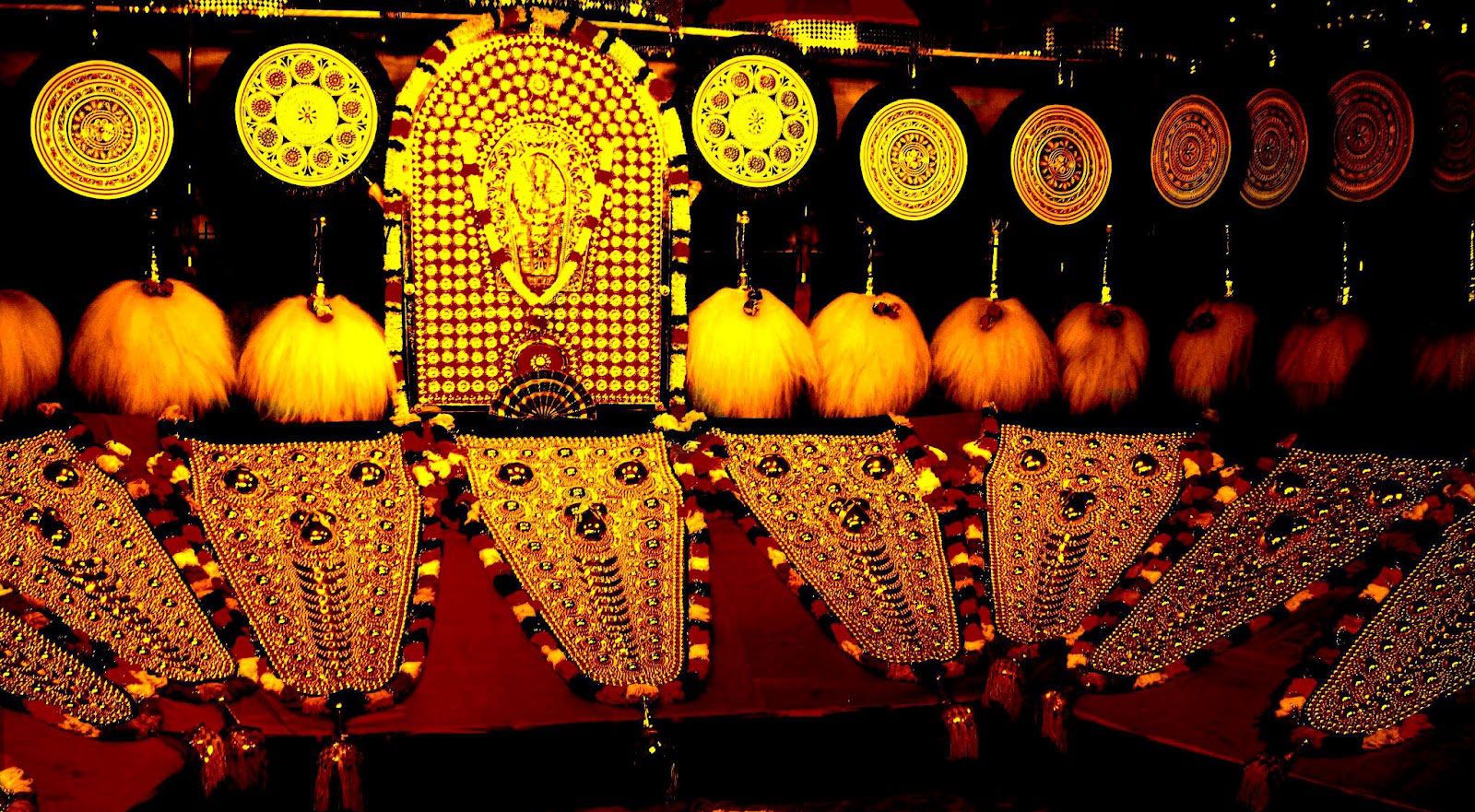
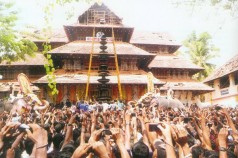
The most important
festival of the
temple is that in
connection with the
famous
Thrissur
Pooram which take
place during the
month of
Medam
(April/May) every
year. Hoisting of
temple flag is an
important function
in this connection.
The flag mast (kodimaram)
made of areca nut
tree is readied by
the entitled
carpenter family and
fixed on the
appropriate spot by
the local people.
The temple priest (Thanthri)
hoist the flag on
the mast after the
necessary Poojas and
invocations.
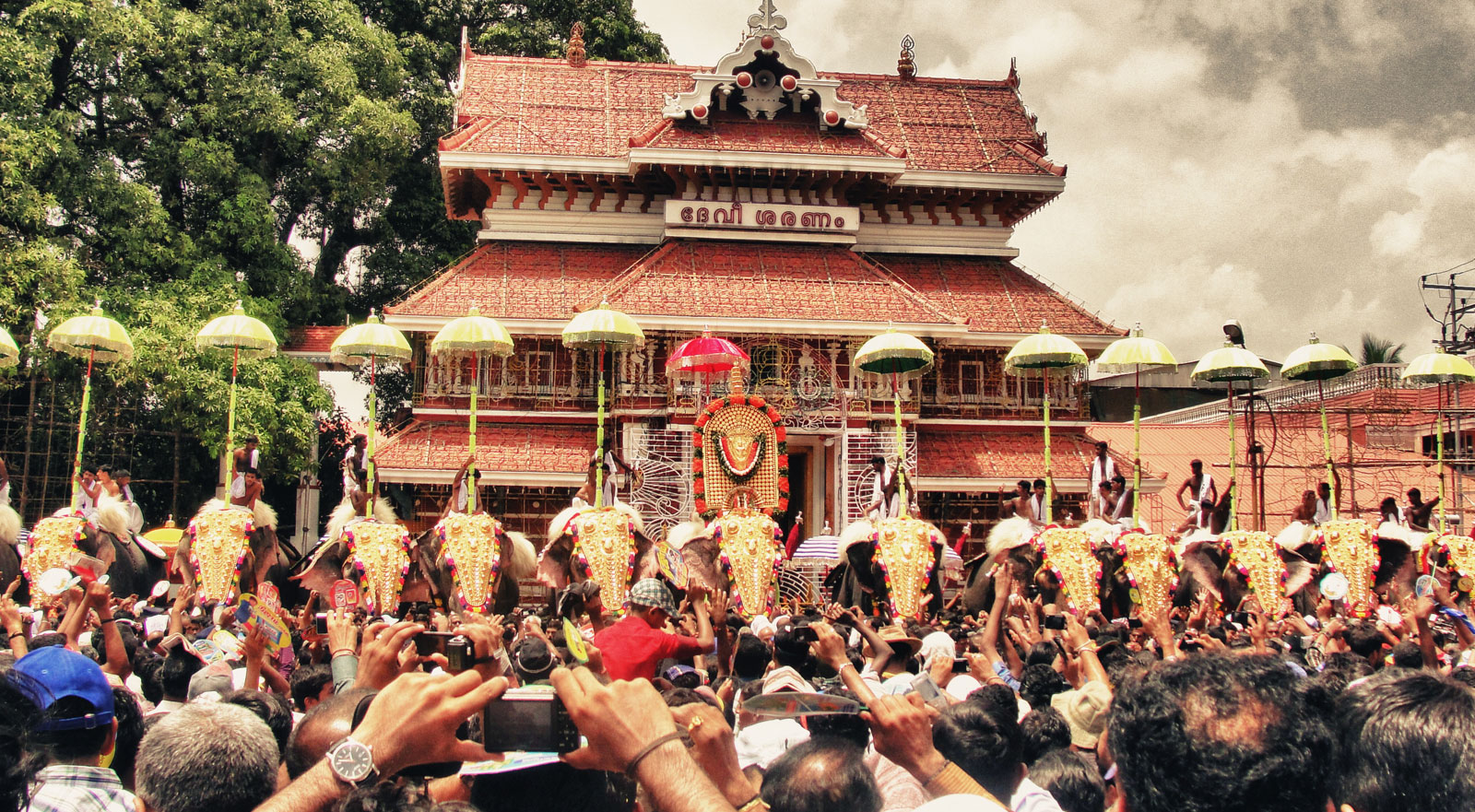
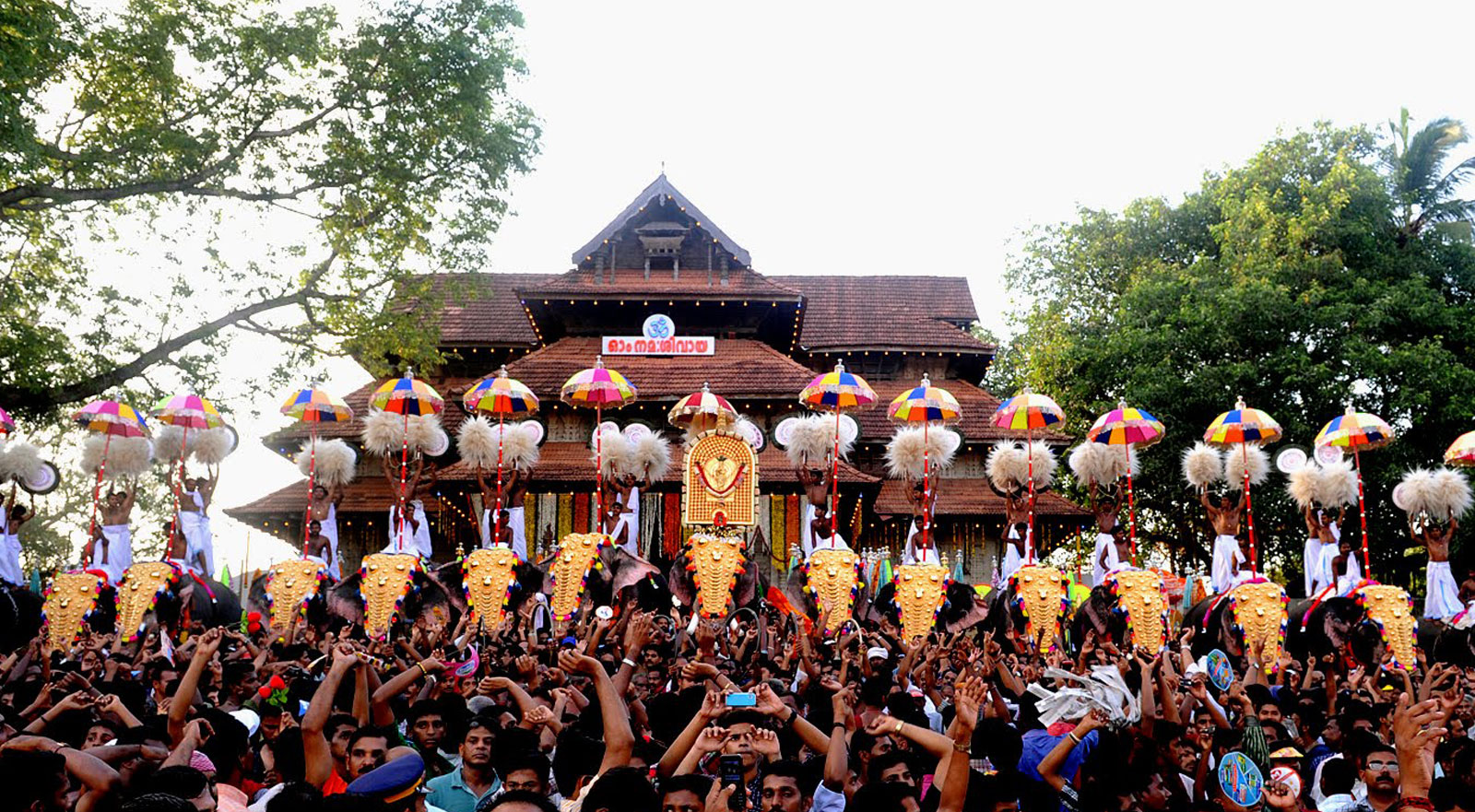
The next seven days
are busy with the
festival rituals and
preparations on the
day of Pooram, Devi
sets out to
Vadakkumnathan
on
the elephant backs
at 6 AM accompanied
by
Thavil, Vadya,
thala and
Mela. All
the people of the
area including the
friends and
relatives assembled
in the temple
sufficiently early
to have a glimpse of
the spectacular
possession and show
of divine splendor.
It is the custom of
the people to
accompany the Devi
to some distance and
also decorate the
sreet with flowers
and place lighted
traditional lamp (Nilavilakku/Nirapara)
on either side of
the road along which
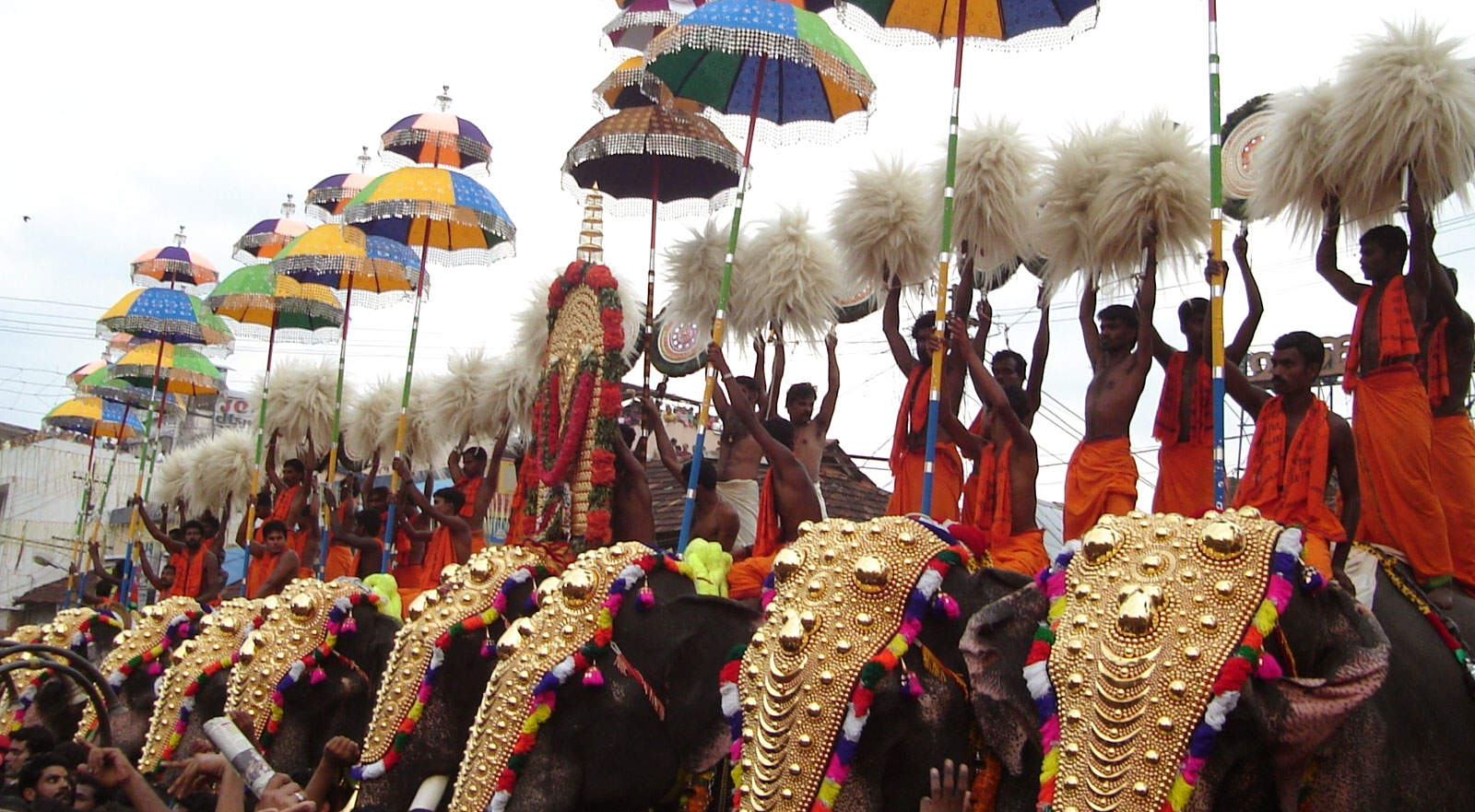
Devi may pass. There
will be three
elephants and
Nadapandi
until the
possession reaches
Kottappuram Railway
bridge. From railway
bridge spot two more
elephants are added
and
Panchavadyam
begins when it
reaches
Naduvilal
point, then umber of
elephants rises to
Thirteen and
Melam
starts in place of
Panchavadyam. The
Ayyanthole pooram
with Thirteen
elephants, the
biggest of the
Constituent
Poorams and next
Only to
Thiruvambadi
and
Paramelkkavu
Pooram, goes upto
Sree Moola Sthanam
and
Melam comes to
an end. Devi enters
into the
Vadakkumnathan
temple after
worshipping Lord
Siva, comes out
through the southern
gateway. The whole
process is repeated
in the night as
well. The next day
after the
Uthram
Vilakku in the
night, with the
de-hoisting of the
temple flag, the
pooram celebrations
comes to an end.
Another important
festival of this
temple is
Thrikkarthika during
Vruschikam
(Nov/Dec). it is a
festival of lights
lasting for seven
days with regular
stage programs in
the night besides
Murajapam and
Rigveda
Sooktharchana are
also regularly held
during those days.
Lakshadeepam
(lighting of lakhs
of oil lamps) is a
spectacular divine
show. During these
days around three
lakhs people will
visit the temple.
Prathishta
(Birthday), the day
is also celebrated
with pomp and show
on the day of
Chothi
(star) in the month
of
Midhunam (jun/July)
every year.
Bhagavatha Sapthaham
(reading and
explanation of the
contents of
Bhagavatham over a
period of seven days
with a definite time
schedule by a
scholor),
Prasada
Oottu (free lunch)
are unforgettable
feat and food for
the body and the
mind.
Laksharchana
in the month of
karkkidakam,
Navarathri
celebrations in the
month of
Kanni,
Makam Thozhal and
Sivarathri
celebration in
Kumbam are other
important functions
here. It may be
specially mentioned
that the
Ganapathi
Homam is performed
in the temple every
day with out fail.
Seeking the blessing
of
Sree Karthyayani
Devi devotees
from far and near
have been visiting
the sacred temple
from time
immemorial. The Devi
is very lavish in
blessing childless
parents with
children, young
maids with suitable
bridegrooms and the
poor with
prosperity. The
number of devotees
visiting this temple
is steadily
increasing. Let all
of us pray together
for the blessings of
Karthyayani
Devi
also generously
grants wished of
devotees. Our Devi
(mother) will
definitely pour her
blessings on us and
lead us in the right
directions.
ALANAKARA
GOPURAM / NADAPURA
Devotees/patrons are
requested to send
their
donations/contributions
for the construction
of our “Alankara
Gopuram/Nadappura”
either in cash or
DD/Cheque kindly to:
The
President/Secretary
Karthiayani Kshethra
Kshema Samithi,
“Alankara Gopuram/Nadappura”
Ayyanthole(PO),
Thrissur,
Kerala-680003
Ph: 0487-2362668,
2363043
Mob: 09387362668
Our SB
Account Number :
000400100129646
Dhanalakshmi Bank
Ltd. Pushpagiri
Branch,
Poonkunnam, Trichur,
Kerala
|
Complete
third floor
work in all
respect from
'Charupadi'
to top gold
plated 3 nos
“Thazhika
Kudam”
|
Rs.
5,00,000/- |
|
Alankara
Gopuram
main door,
door frame
and step in
teak wood
with brass
ornamental
fittings |
Rs.
4,50,000/- |
|
Nadappura's
pillar 17.5
feet(1 no.
in all
respect) |
Rs.
1,00,000/- |
|
Nadappura's
pillar for 4
individuals |
Rs. 25,000/-
each |
|
Gopuram
top 3 nos
erected
copper
thazhika
kudam
gold plating |
Rs. 25,000/-
each |
|
Temple's
front side
walls
decorated
with
embossed
type
god's/goddess's
statue 2 nos |
Rs. 40,000/-
each |
|
President |
| |
M.C.
Balakrishnan
Mob:
+91
9387362668
Email:
mc.balakrishnan@hotmail.com |
|
|
General
Secretary |
| |
P.M.
Radhakrishnan
Mob:
+91
9847292544 |
|
|
|
|